Organic materials create problems in plumbing systems. Grease, hair, food particles, and paper going down the drain can clog your pipes and slow or stop draining of your system. Clogged drains are best serviced by a trained plumber who can identify the problem and fix it correctly. How do they do it, though? There’s a few different ways:
• Mechanical Drain Cleaner: Plumber’s snakes are long coils that slink down pipes and can grab or push along any obstructions that may be causing a blockage. They also clean the sides of pipes by dislodging deposits of oil and minerals caked onto the side. Mechanical drain cleaners are a safe and efficient way to clear up a drain without using caustic chemicals.
• Alkaline Drain Cleaner: Alkaline cleaners use strong bases to break up and dissolve organic blockages. Usually, they contain lye. As the bases in the cleaner react with the organic material in the drain, they release heat, which helps to free up grease caked on the edge of a pipe. However, alkaline drain cleaners can be very toxic and harmful to humans, as well as cause damage to pipes or the environment.
• Acid Drain Cleaner: Acid drain cleaners are similar to alkaline drain cleaners. They use strong acids, like hydrochloric acid and sulfuric acid, to dissolve and dislodge organic material stuck in drains, while also releasing heat to help melt grease. Acidic drain cleaners are even more dangerous than alkaline drain cleaners, and should not be used by untrained people as they can cause severe injury if used incorrectly, as well as further damaging your plumbing.
• Bacterial Drain Cleaners: These environmentally friendly drain cleaners use bacteria and enzymes to get rid of organic matter in a clog. They are a lot safer than acidic and alkaline drain cleaners, but work a lot slower as a result. They are also ineffective at clearing total blockages since they require flowing water to work perfectly.
Trying to clear a blockage yourself can create a greater issue and cost you more money in the end. What’s the best way to deal with a clogged drain? Call a plumber! Give us a ring at (972) 931-1021 or fill out our contact us form! Don’t risk your pipes or more expense!
Nothing is worse than getting home after a long day, turning on your shower and nothing but icy cold water comes out (unless you like cold showers). If you’re experiencing problems with your water heater and thinking about replacing it, the first question to consider is what type of water heater is for me – gas or electric?
Gas Water Heaters
Gas water heaters are found in most homes. Gas heaters burn natural gas to heat water and are capable of heating water faster which is often more ideal for larger families. Gas water heaters are also an inexpensive investment because they burn natural gas so it’s a very low monthly cost. Gas water heaters have a greater tank capacity up to 80 gallons of water and more. Their life expectancy is 8-12 years and the best part is gas water heaters require very minimal maintenance!
Electric Water Heaters
Electric water heaters give homeowners peace of mind when it comes to safety. While the chances of an explosion from a gas leak are very slim, being electrocuted from faulty wiring to your water tank are slim to none. Because the tank is electric, there is also no pilot light that would need relighting if the flame accidently goes out. Electric water heaters use fewer parts than gas water heaters and do not expose the parts directly to heat which means they may last past the normal life expectancy. Electric water heaters can also be less expensive to install because they do not require as many code updates such as sediments traps and venting adjustments.
Still Need Help?
If you’re still not sure which water heater would best suit your needs and your home, our experts at Rodger’s Plumbing would be happy to help you with any questions! Give us a call today at (972) 931-1021 or fill out our contact us form!
Your shower gets constant daily use especially if you have a large family. Being able to take a relaxing and clean shower is something we take for granted until a problem occurs like faulty plumbing, unreliable water pressure, or even a clogged shower head. Are you thinking of replacing your outdated shower head? Here are four reasons why you should!
Change in Water Pressure
As your shower head gets more and more use a change in water pressure can occur. This could be something as small as the head getting loose which is easily fixed by readjusting it. In other cases a shower head may just be worn from constant use, making it less reliable to control water pressure.
Drip… Drip… Drop
If you’re noticing that your shower head has developed a leak it may be time to consider a new one. In some cases a leak can occur due to a small fix such as a warn-out washer ring which needs to be replaced. However, if the leak keeps occurring it may be time to consider investing in a new faucet.
Water Efficiency
Older bathrooms may include older shower heads which are not always water efficient. Showering is one of the leading ways we use water in our home. In the U.S. alone, we consume nearly five billion gallons of water daily. Newer shower heads use less water than older models without sacrificing performance. This will help you conserve water while saving money by keeping your water bill down!
Sediment Buildup
The water that flows into your house and your pipes is treated with chemicals and additives that make it safe for consumption. Inside your shower head there is a screen or water restrictor which helps filter these chemicals, additives, and debris out. These screens can get dirty over time causing a buildup of sediment in and around your shower head. If you notice a buildup of sediment in or around your shower head it may be time to replace it!
By simply having a new shower head, or tub/shower fixtures installed, you can give your bathroom a quick but luxurious makeover into the spa retreat of your dreams. Let Rodger’s Plumbing help this become a reality by giving us a call today at (972) 931-1021 or filling out our contact us form!

How to Take Care of Your Garbage Disposal
Garbage disposals are a gift to have in the kitchen to help keep your trash can smelling fresh (or at least not as bad). If you are thinking about purchasing a garbage disposal or if you already have one and are wondering what is acceptable to put through it to keep things running smoothly, than you’re in the right place.
There are a couple rules for WHAT you can put down your garbage disposal and HOW exactly to do it. First things first ANY time you run your garbage disposal the water should be on. This helps push the food through your pipes as well as helps lubricate the spinning part of the disposal. So you might be wondering what temperature you have the water at while you run the disposal. Well contrary to popular belief you should always run COLD water when you’re using the GD to make sure it does not overheat. This is the best way to run the disposal, but what can you actually put down it?
Dos and Don’ts of the Garbage disposal:
Do dispose of:
- Liquids – liquids will easily go down the garbage disposal as long as it isn’t fat or oil based
- Small pieces or soft food – why make the disposal work any harder than it has to, if you have chocolate pudding and chopped pepper (weird combination, but is only hypothetical) throw it down the garbage disposal and as long as the water is running it should make short work of your weird meal.
- Plate scrapings – as long as you don’t try to shove a whole plate food down the disposal everything should go smoothly and remember, the smaller the pieces the better your disposal and pipes can handle it.
- Cooked meats – If you have a few small pieces of cooked chicken or pork it is okay to put them down your disposal but only if you follow the rules above.
Don’t Dispose of:
- Fats and oils – although a well-known fact we have to mention that even though you have a garbage disposal any oil, grease, or fat you pour down the sink can and will most likely cause clogs. For more information on what to do when you cook bacon and have left over fat check out one of our past blogs.
- Non-food items – not only are non-food items not good for the sewer system, but they also are not good for your garbage disposal. So make sure to properly dispose of all twist ties, straws, forks, and bags.
- Celery – this might come as a surprise but foods such as celery, rhubarb, asparagus, lettuce, raw potato, and onion skins should not go down your garbage disposal as they could get caught in the blades and overheat or break your garbage disposal.
- Seeds and bones – lumped in together for this list is seeds and bones. Things such as turkey bones, avocado seeds, and apple cores should not be put through the disposal. These objects are too hard for the motor and can cause some serious damage.
- Eggshells – although controversial on whether or not it is damaging to put eggshells through the disposal we like to err on the side of caution and say that the dust that is a byproduct of the shells might harm the blades or motor of your disposal.
To overview we listed a couple of dos and don’ts for what to put down your awesome new (or awesome old) garbage disposal, but as a disclaimer we should say that you should always review your user manual to make sure what you WANT to put down the drain is something that you CAN put down the drain. And remember-Even if the disposal will grind it up, the pipes may not be able to handle it.

What Is The Difference Between Soft And Hard Water?
Have you ever wondered what makes water hard or soft? Or why some water leaves cloudy residue on your dishes or shower curtains? Well this article will explain the difference between the two different kinds of water and what are the pros and cons between the two.
First off the main difference between hard and soft water is that hard water contains more minerals and that soft water is treated to have less minerals. It’s quite simple, but to dive a little deeper into the subject and get our hands wet it is important to know what minerals are actually contained in each type of water.
Hard water contains more minerals such as:
- Calcium bicarbonate
- Magnesium bicarbonate
- Calcium Sulphate
- Magnesium Sulphate
- Calcium Chloride
- Magnesium Chloride
Soft water contains fewer minerals such as:
- Sodium
These are the main differences between the structures of both types of water, but how does the difference affect you. Because of the high mineral quantity in hard water it leaves residue on things that it touches such as showers curtains, shower heads, and glass dishware. Another product that is caused by the hard water is the reaction it has with dish soap. Due to the minerals counteracting the soap particles when washing dishes with hard water, foaming will not occur and a “film” will be seen. This is opposed to soft water that causes dish soap to bubble and create suds as there are no minerals to counteract the mixing of the soap and water. Not only will it help clean dishes but it won’t leave noticeable residue on dishes or in the shower.
So why would we even use hard water? Well we don’t use soft water for everything for two reasons. The first reason is that hard water is more readily available as it is the way water is naturally found on land. To create soft water there is only two ways of doing so:
- Collect rain water that is naturally soft
- Or treat hard water by removing excess minerals
This is why we still use hard water. The second reason why hard water is still so prevalent is because to most people, it tastes better. Water high in minerals tastes less “salty” to people because of soft water’s concentrated sodium levels. Hard water is also seen to be healthier for people on low sodium diets as treated water effectively concentrates the salt level.
In conclusion we learned the difference between the two types of water, hard and soft, and learned about the advantages and disadvantages of both.
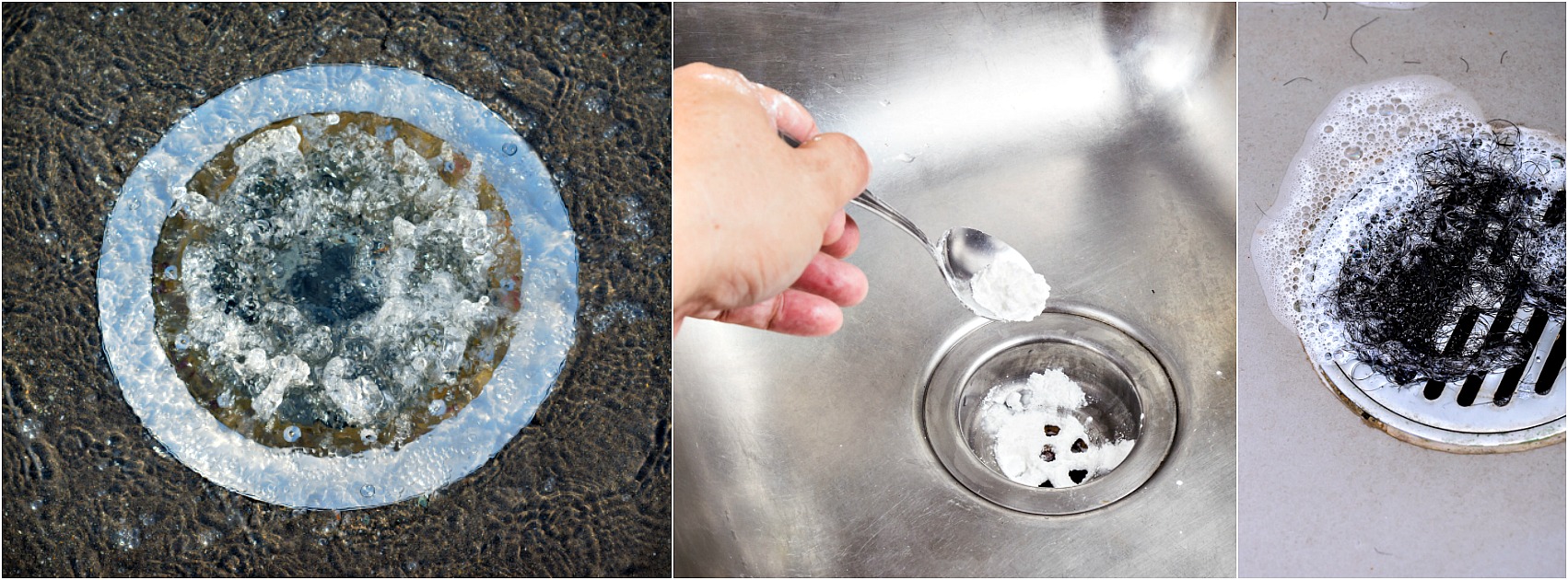
How to Clear Your Clogged Drain With Common Household Items
Have you ever been in a situation where your sink is clogged or your shower won’t drain and it’s too late to go to the store or you don’t want to use harmful chemicals? Here are some household hacks to get the drain working as good as new without the need for harsh drain cleaners.
Here is a list of three different methods to unclog your drain with household ingredients (before trying any of these methods, be sure to remove any external hair or gunk from the drain):
- Boiling Water – The simplest of these three methods and the one you should most likely try first is to pour boiling hot water down the clogged drain. The trick is to pour the water slowly and intermittently to give the hot water some time to work its magic. If this doesn’t work it might be time to move onto method two!
- Baking Soda & Vinegar – A well-known method recommended by moms everywhere, a 50/50 mixture of baking soda and vinegar poured down your drain and then left to sit for half an hour will help break down any soap scum or clogs that are in your pipes. After letting it sit run boiling/hot water down the pipes to move the clog through. If the clog is in the bathtub it is also helpful to use a stopper and fill up your tub completely. After it is full if you release the stopper all of that water should cause enough pressure to push the clog clean through your water system. Again if this doesn’t work it might mean you have to move on to method number 3.
- Drain Snake/Wire hanger – Method number three is something that should be done jointly with the other two methods for a bad clog. You can use a drain snake or you can straighten out a wire hanger to use to stick down the drain and pull out or break up whatever the clog consists of.
If none of these quick household methods work it might be time to call the professionals. If you have a stubborn clog that you just can’t get through your piping system give Rodger’s Plumbing a call and get a free quote! (972) 931-1021

Preventative Drain Care
In order to keep your pipes and drains clean, preventative maintenance is important. This starts with being careful and proactive with cleaning as well as being aware of what you are putting down the drain. There are a few ways to clear a clogged drain which include chemical cleaners, plumbing snakes, plungers and more. Using the proper care will help to extend the life of your drains.
The first thing you will notice if you do not take good care of your drains will be a bad smell. This will mostly be common in bathroom sink drains or kitchen sinks where food particles build up. The next thing noticed is the sink holding water and draining very slowly. This usually is the end of a slow process of build up before the drain becomes completely blocked by the clog.
When it comes to bathtubs and showers, the common culprit for a clog is usually hair built up in the drains. Using a wire mesh filter to cover the drain is a great way to prevent this from happening and avoiding a headache down the road. Simply clean it out after each shower.
In the kitchen, a garbage disposal will help to prevent a lot of food build up in your drain. Rodger’s Plumbing can install a new garbage disposal which can help to shred plate scrapings into smaller pieces, helping them to travel through your pipes.
If you have a stubborn clog that you are not able to clear yourself, Rodger’s Plumbing can help!
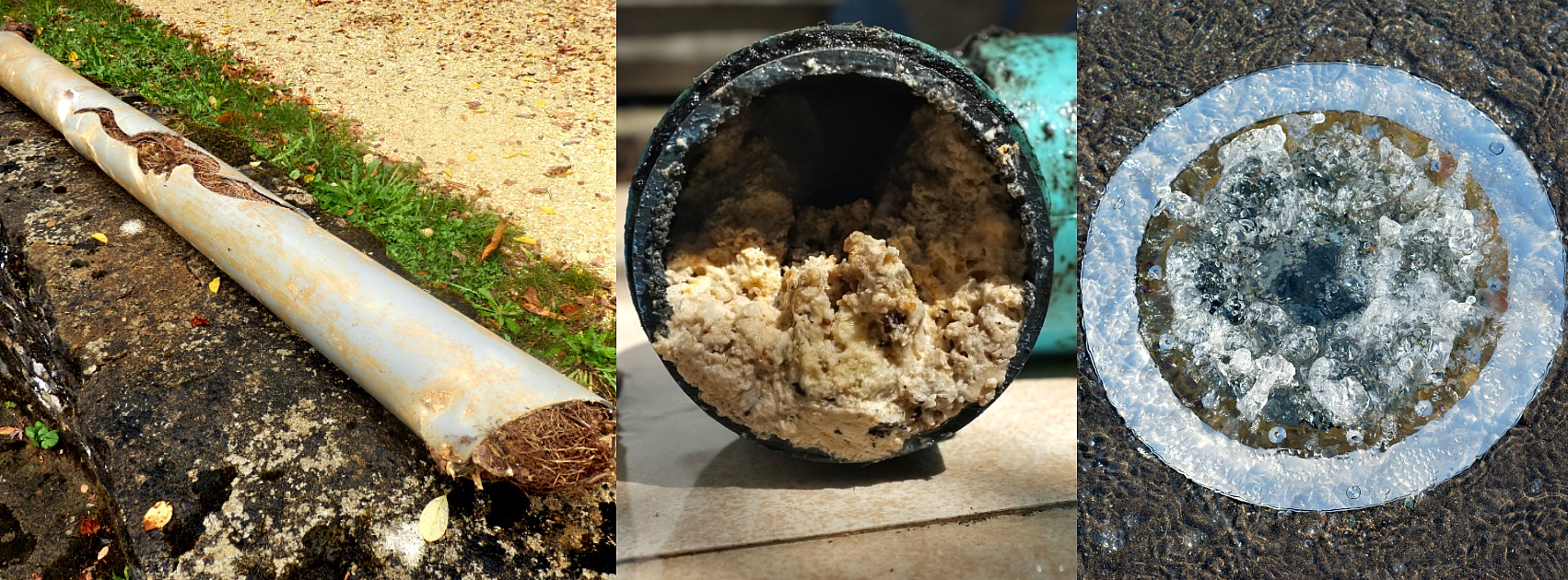
3 warning signs of a clogged sewer line
Imagine you’re taking a hot relaxing shower and sewage starts oozing out of your drain. Before your drains start spewing out slime, there are several warning signs that you have a sewer line problem. The earlier you catch this problem, the easier it is to fix and prevent damages to your home.
- Gurgling toilets: The most common warning sign of a clogged sewer drain is a gurgling toilet. If your toilet is gurgling while using water in other areas of the house such as using the dishwasher, than your sewer line is clogged.
- Slow drains: When a single drain is slow, than most likely there is an issue with that one drain. If all of your drains are draining slowly than you have a clogged sewer line.
- Leaking Drains: When using water throughout your house, if it causes water to come up through the bathtub drain, shower drain, floor drain, or between the commode bowl and floor, than you have a clogged sewer line.
Clogged sewer lines can cause very costly damage to your home. These damages can lead to expensive repairs or replacements. If you experience these warning signs it is extremely important to contact a professional immediately!

How does the summer affect your plumbing?
Summertime is great for being outdoors, family cookouts, and hanging out friends. These warm sunny days have a huge impact on your plumbing you may never have known about. Here are few plumbing disasters to avoid this summer.
Washing Machines
Kid’s are home for the summer and their adventures outside and by the pool create a lot of laundry. These extra laundry loads put additional stress on your laundry drain line and can cause it to clog and overflow. If a problem arises stop the cycle and immediately call a plumber.
Clogged Disposal
Summer is a great time for cookouts and barbeques with friends and family. After these gatherings there is normally a lot of food waste to get rid of. Disposing hard fruits and vegetables such as corn or watermelon can have a negative effect on your garbage disposal. Cooking oils can also damage your garbage disposal so avoid pouring dirty grease from grilling, down the drain.
Clogged Toilets
Household toilets are used more often in the summer with children being home throughout the day. It is important to show your kids the appropriate amount of toilet paper to use. Most clogs can be handled with a plunger, but if the problems persist or the toilet overflows, call a professional.

National Hug a Plumber Day – 4/25/17
Whether it is a minor leak or a major clog, a plumber will have the correct tools for the job. Without plumbers, our society would not be as we know it. They help us improve our lives and health in our modern world. We celebrate all of the hard work, skill and ingenuity of plumbers in our country on April 25th, by celebrating National Hug a Plumber Day! We remember that feeling when our sinks flow properly, the water damage in our basement is fixed and we have hot water on demand.
To celebrate National Hug a Plumber day, we encourage you to use #NationalHugaPlumberDay on social media to spread the word! If you happen to see a plumber on this day, you know what to do!